Japandi studio apartment ideas
Japandi Studio Apartment Ideas for Small Spaces
Japandi style works especially well in a studio apartment because it values calm, function, natural texture, and visual restraint. The goal is not to make a room empty. The goal is to make every visible choice feel useful, quiet, and intentional.
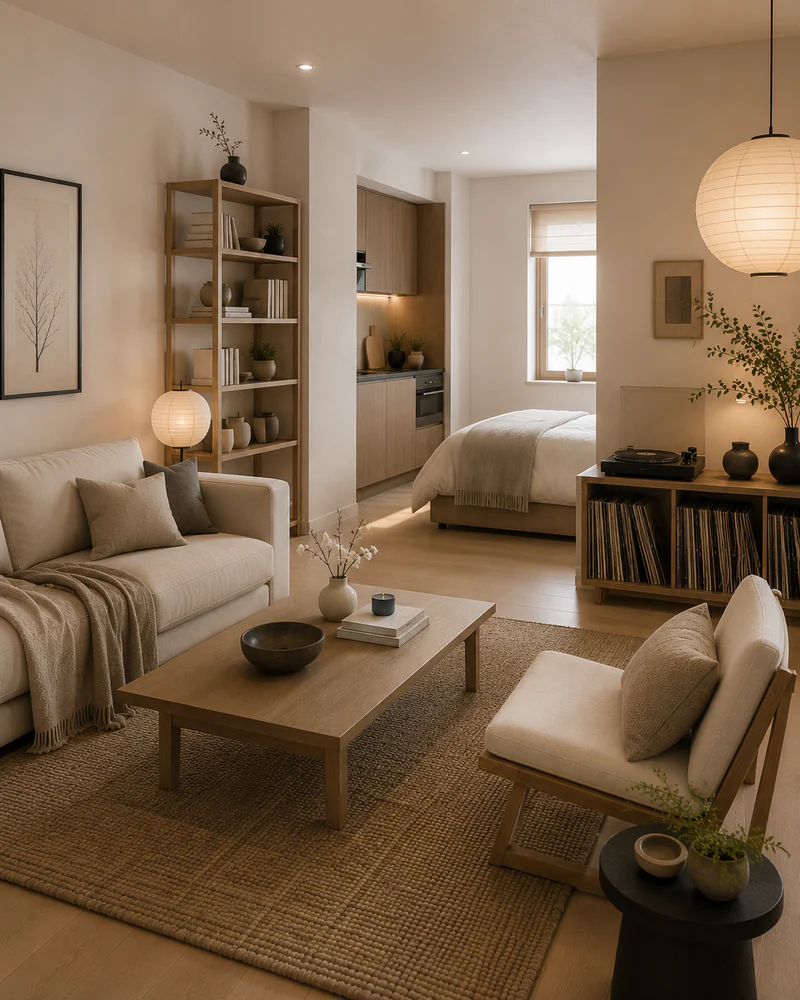
Tap the markers to shop similar pieces inspired by this room.
A Simple Japandi Small-Space Starter List
For a small studio, focus on pieces that support the mood without crowding the room: one grounding rug, warm lighting, simple storage, natural bedding, and a few black accents for definition.
Helpful finds
1. Start with a Calm Neutral Color Palette
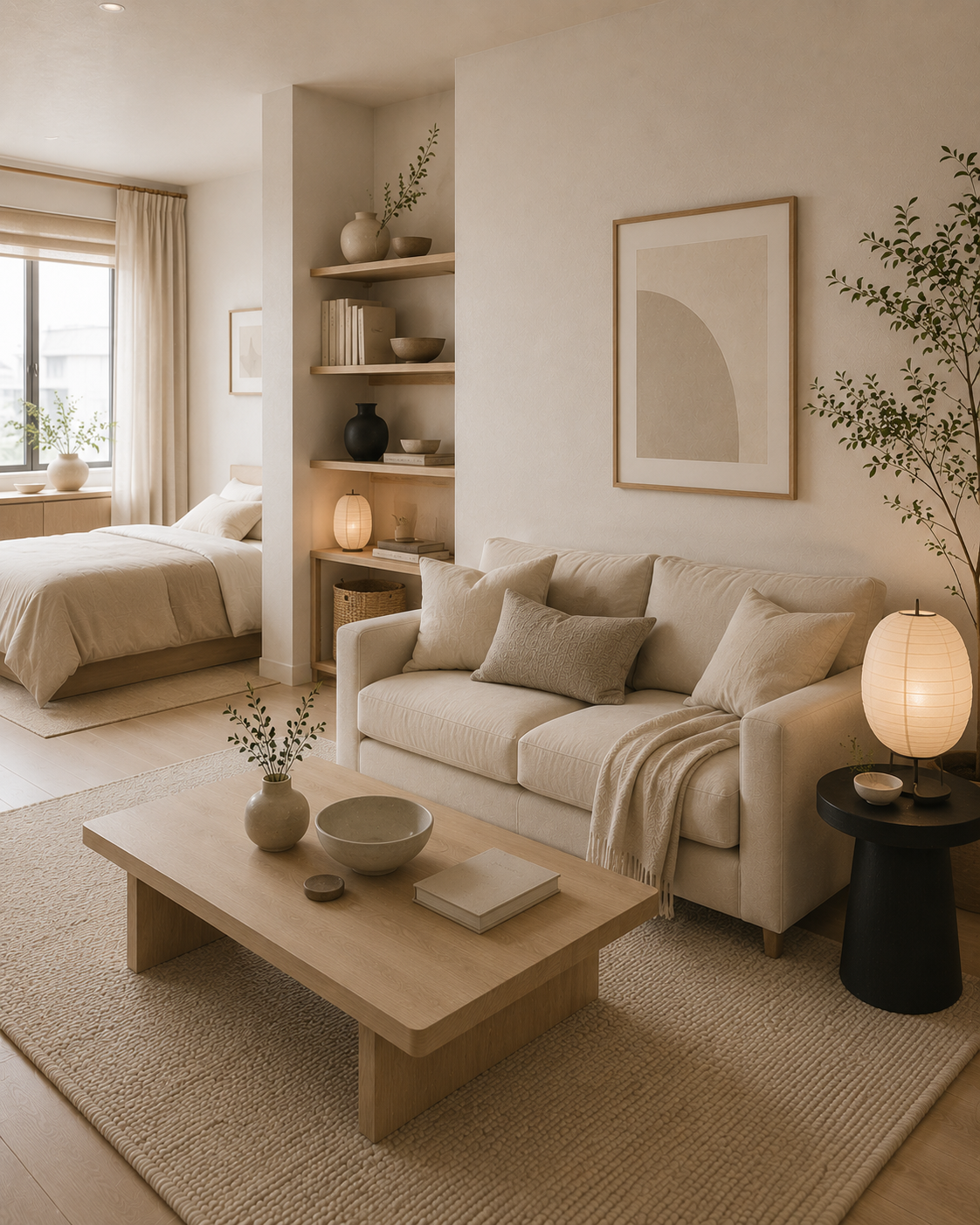
A Japandi studio apartment usually starts with a restrained palette: warm white, cream, beige, oatmeal, taupe, soft gray, warm wood, and touches of black. In a small space, this keeps the room visually connected instead of chopped into separate zones.
Use the lightest tones on the largest surfaces, like walls, bedding, curtains, and the main rug. Then repeat two or three deeper accents through lamps, side tables, frames, or chair legs so the apartment still has structure.
2. Add Black Accents for Contrast
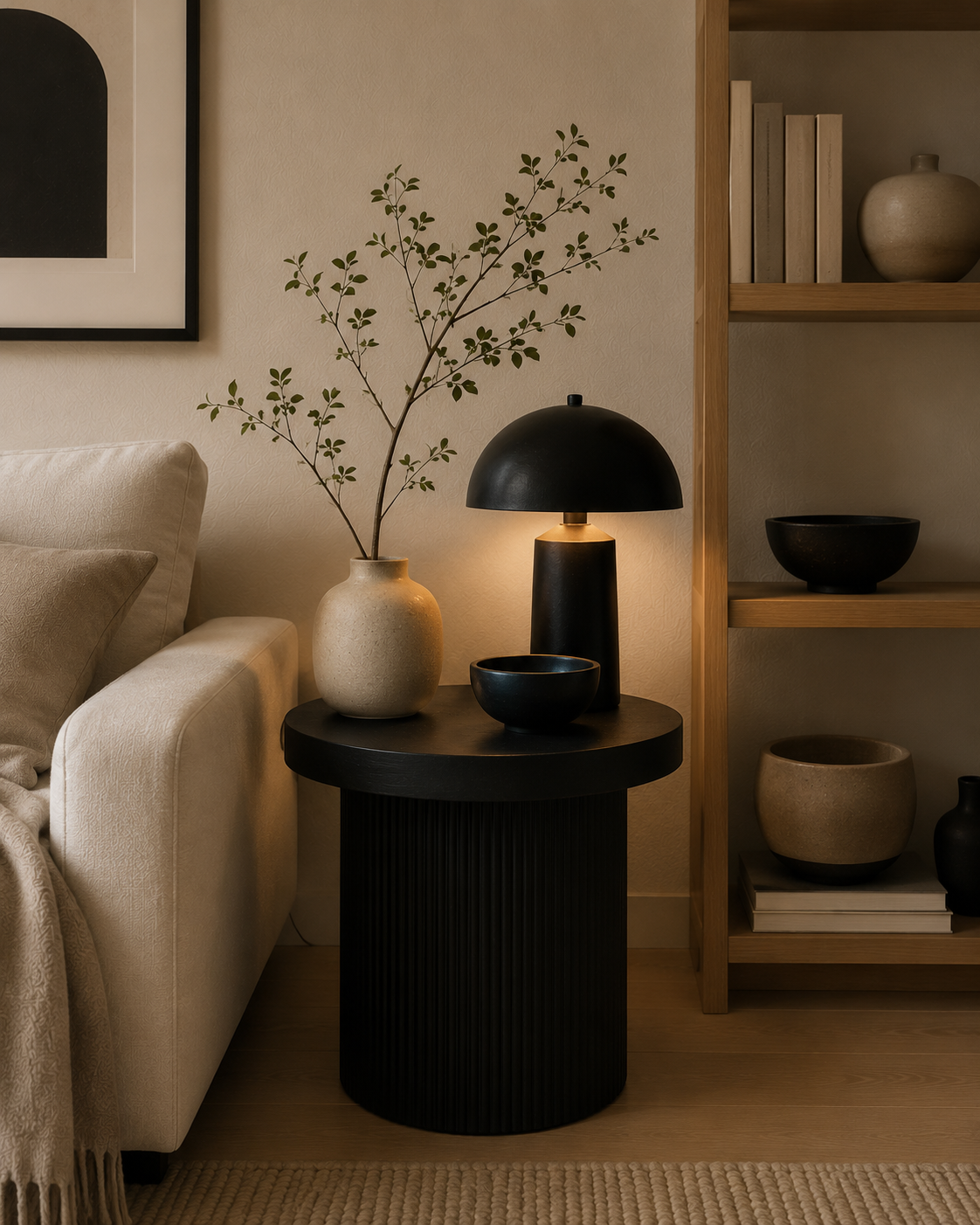
Black accents are useful in Japandi rooms because they add clean definition without needing bright color. A small black table, slim picture frame, or dark lamp base can make a neutral studio feel more grounded.
Keep the contrast controlled. One or two black pieces in each visible zone is usually enough for a studio apartment.
Helpful find
3. Choose Low-Profile Furniture
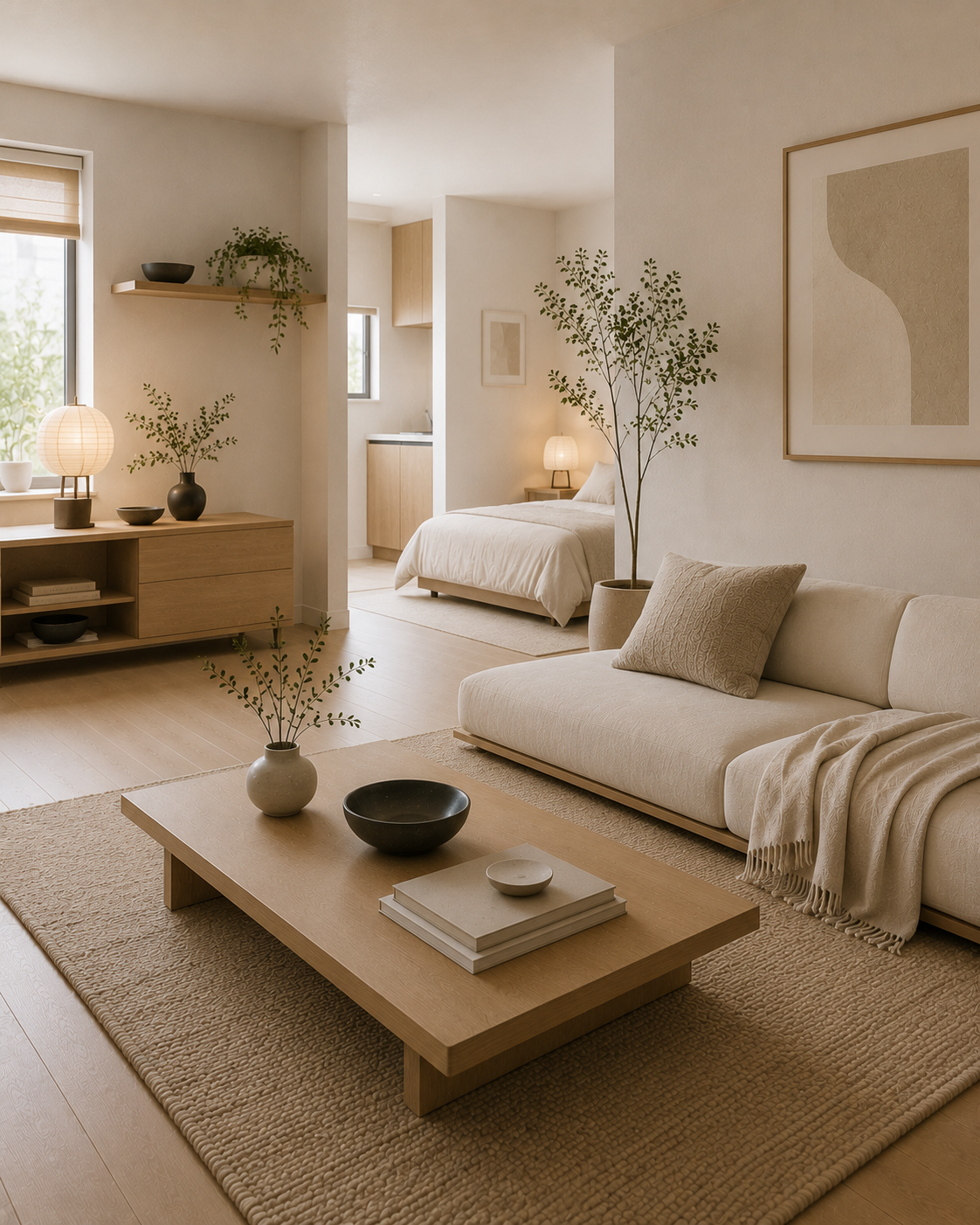
Low-profile furniture helps a studio feel calmer because it leaves more visible wall space above each piece. Look for simple silhouettes, exposed legs, low beds, compact loveseats, and open shelving instead of bulky furniture that rises too high or blocks light.
The goal is not to make everything tiny. Choose pieces with enough function for daily life, but avoid extra visual weight where it does not help.
4. Use Warm Lighting
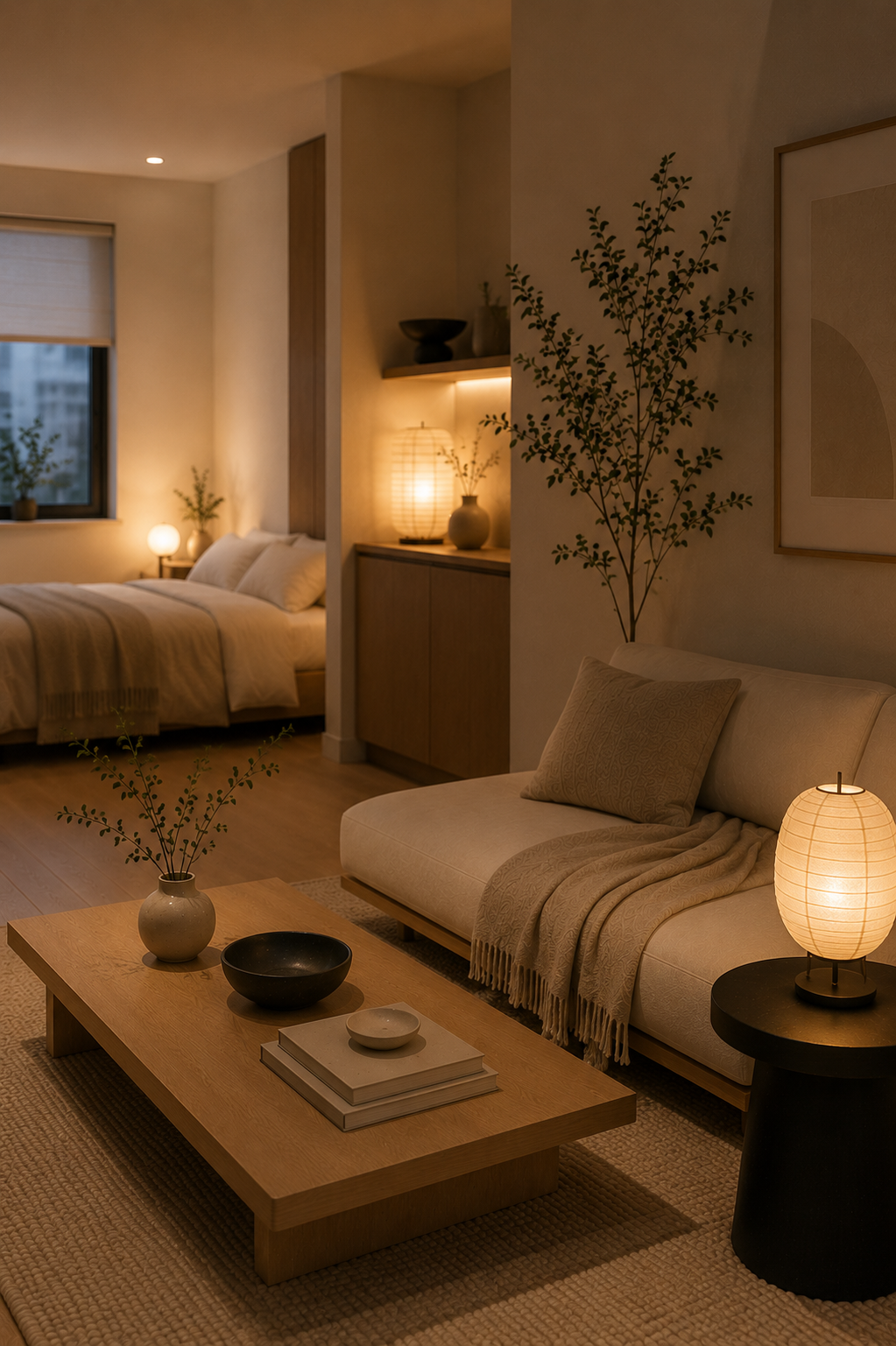
Japandi rooms rely on soft, warm lighting more than decorative clutter. A table lamp beside the bed, a paper floor lamp near a reading chair, or a small lamp on a shelf can make one-room living feel layered and restful at night.
Avoid relying on a single overhead light. In a studio, several small pools of light make the space feel more intentional.
Helpful finds
-
Get the Japandi Lighting Look Shop a paper-style lamp that works well with this warm, layered lighting approach.View the Lamp on Amazon →
- Rice paper floor lamp
5. Ground the Room with a Neutral Area Rug
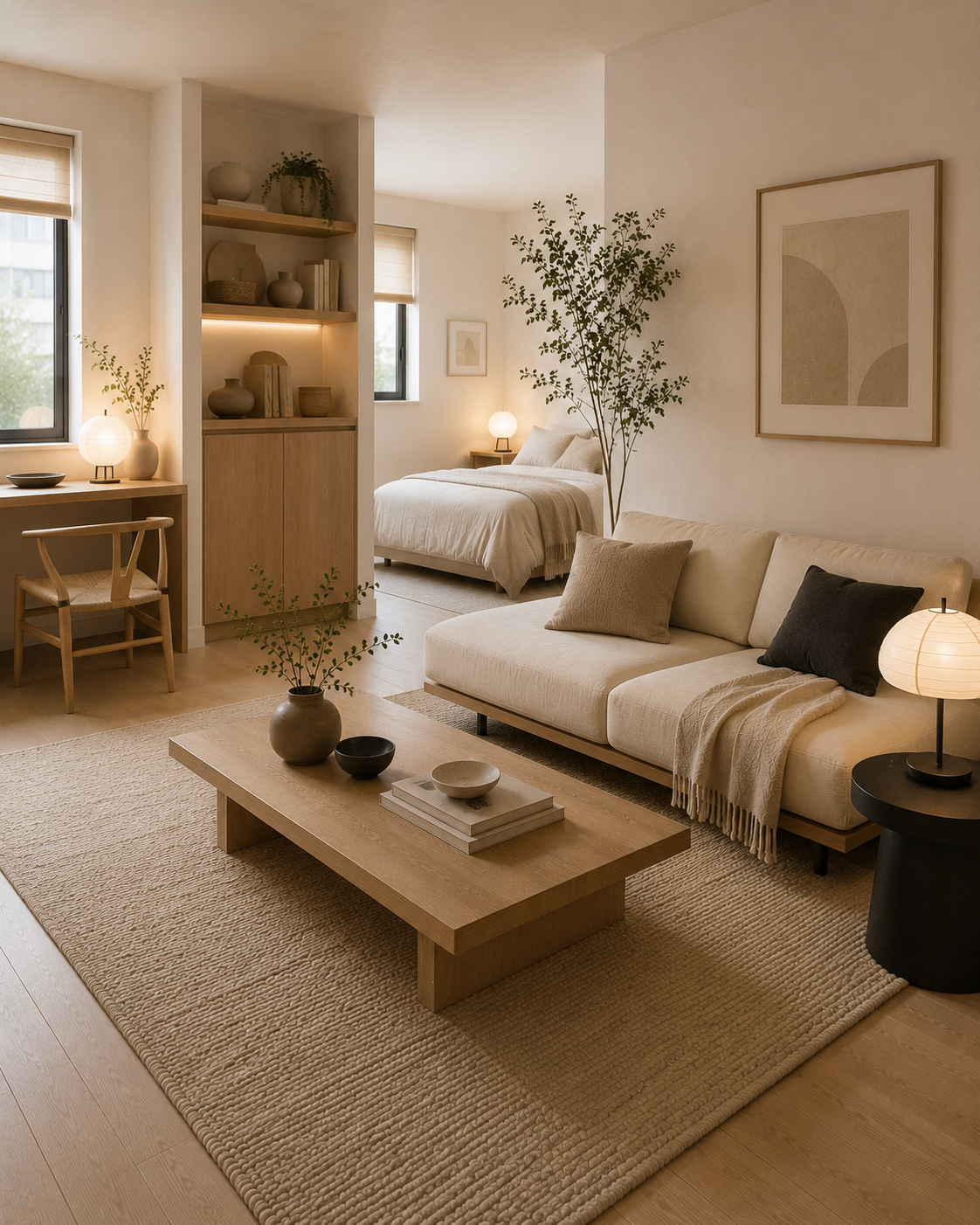
A neutral rug can make a small studio feel finished without adding clutter. It visually gathers the living zone, softens hard floors, and gives the room a calm base for wood, linen, ceramic, and black accents.
Choose a rug with subtle texture or a low-contrast pattern. Strong colors and busy motifs can fight the quiet mood that makes Japandi style work.
Helpful find
7. Add Natural Textures Carefully
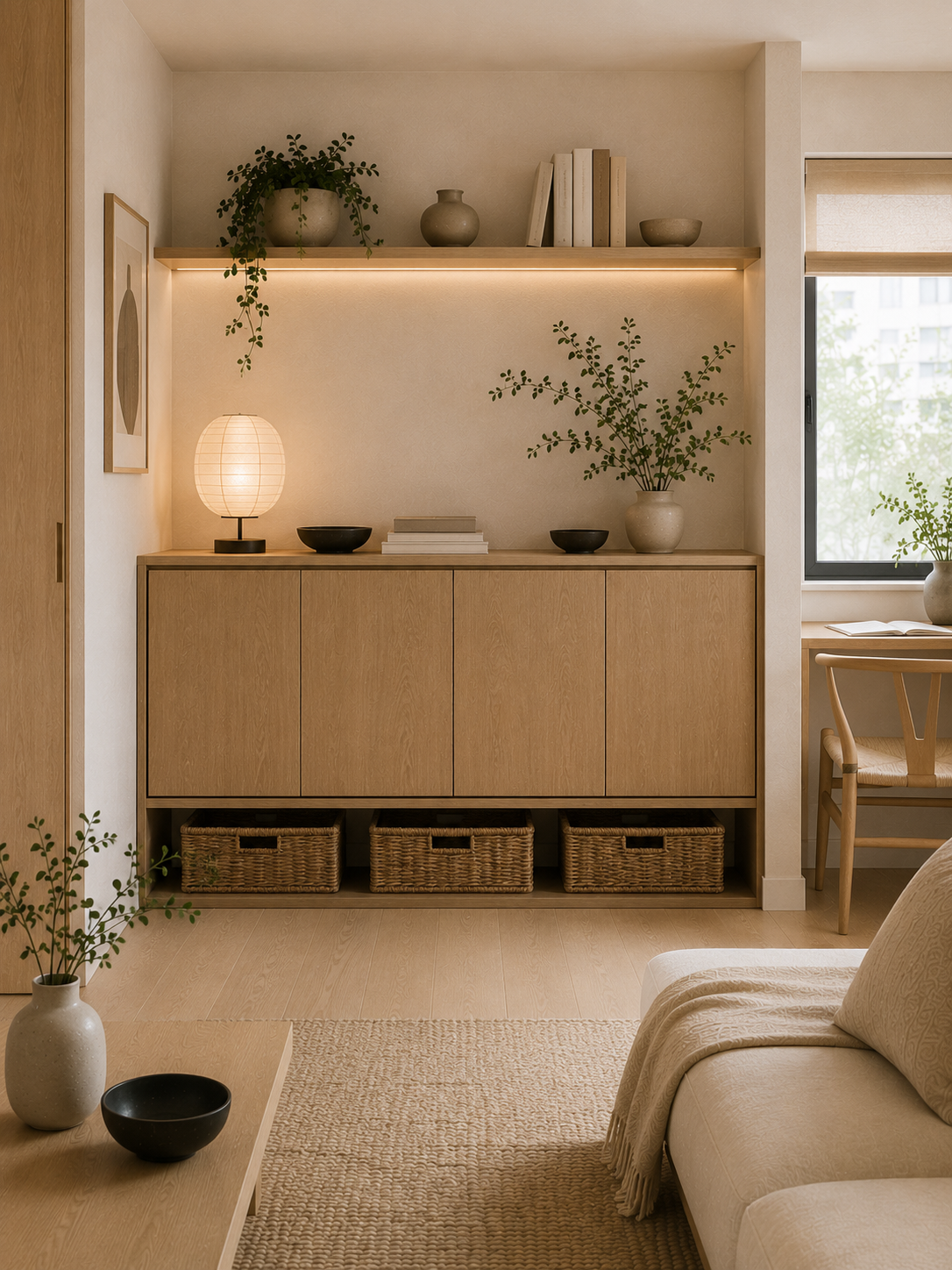
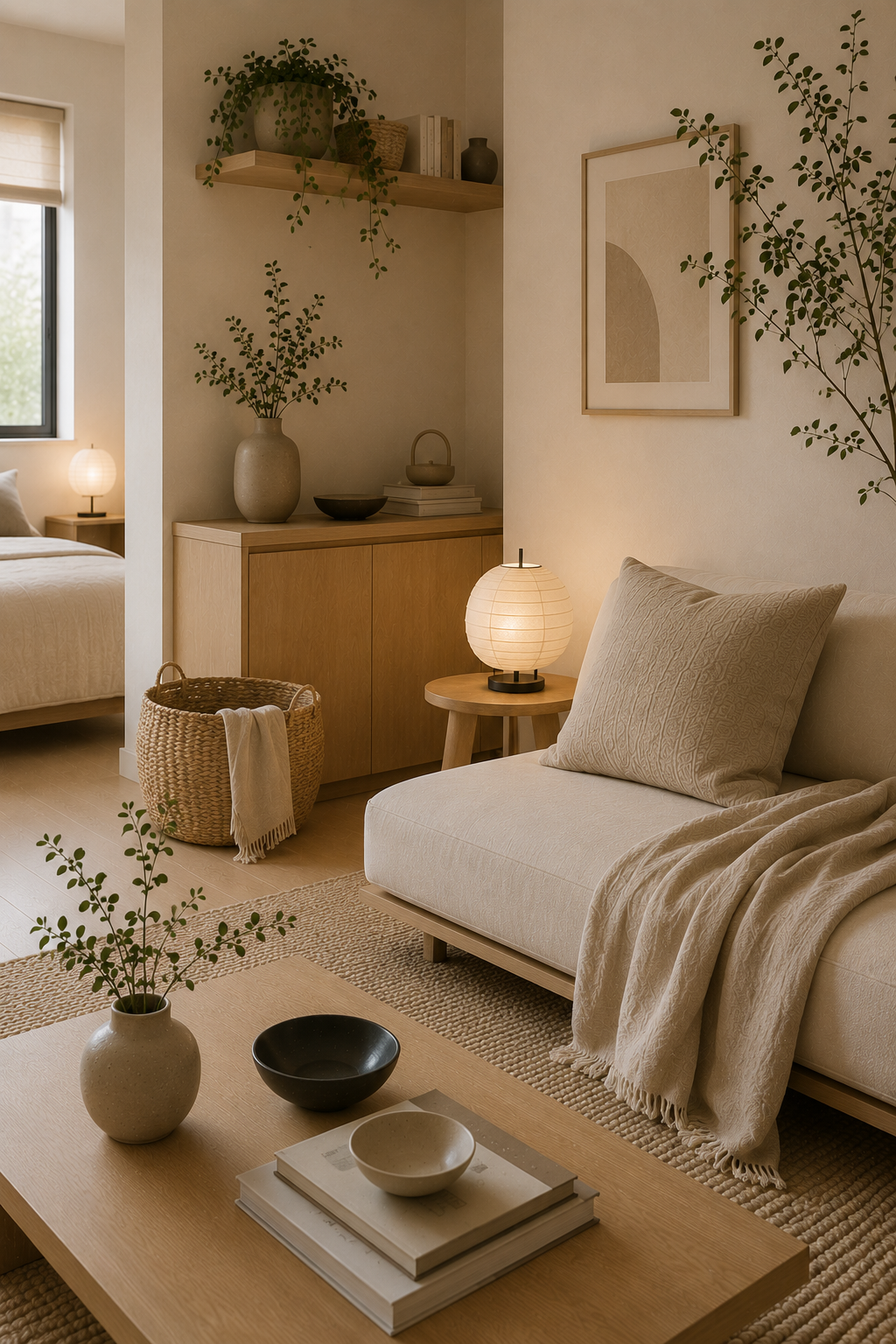
Japandi style often uses linen, wood, paper, rattan, ceramic, cotton, and woven textures. In a small apartment, the key is restraint. Pick a few natural materials and repeat them instead of adding every texture at once.
Linen bedding is an easy place to start because the bed is usually visible in a studio. It adds softness and texture while keeping the sleeping zone relaxed.
Helpful find
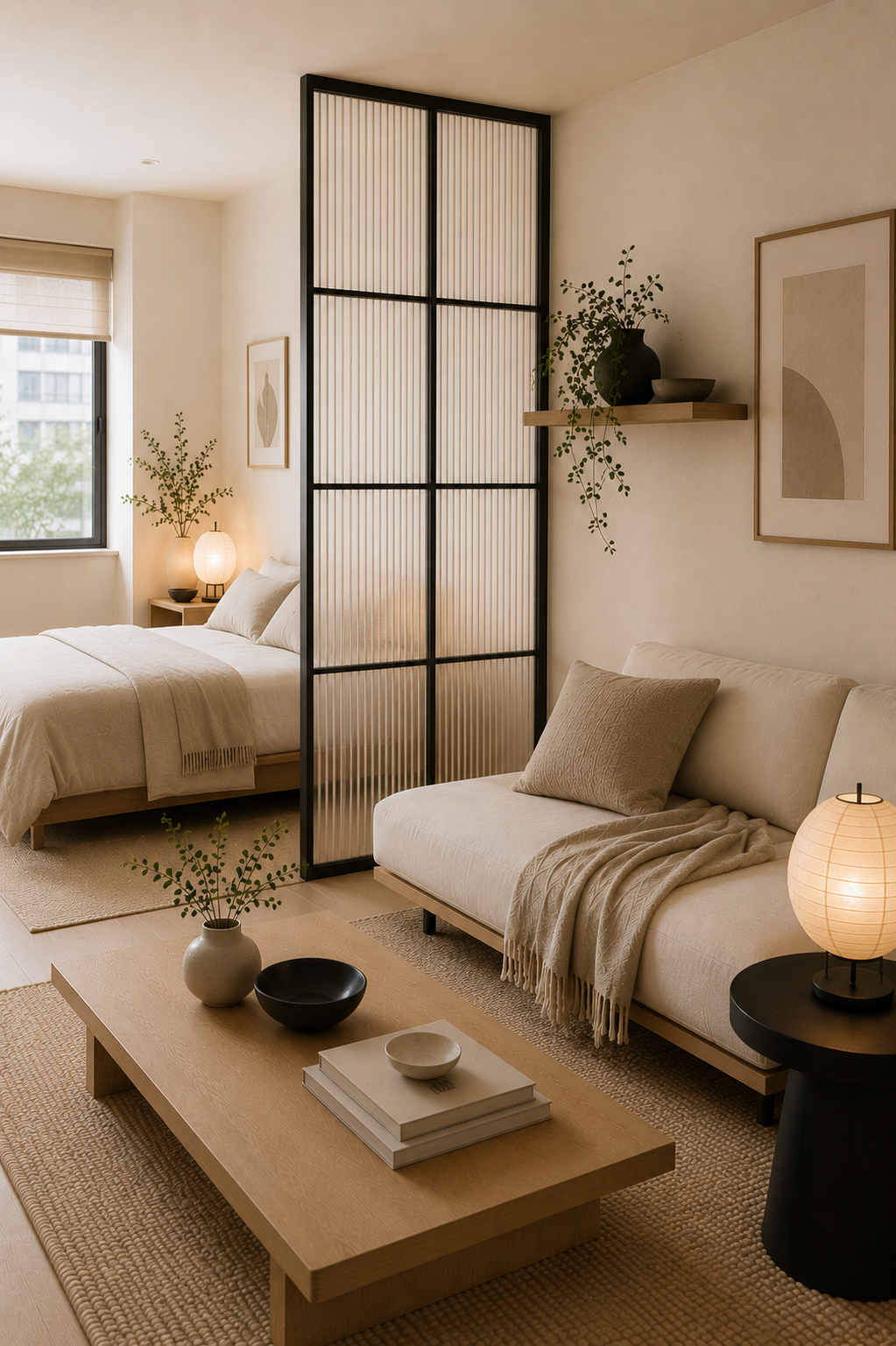
8. Use a Room Divider or Soft Partition
A studio does not always need a hard wall between the bed and living area. A slim divider, open shelf, curtain, or folding screen can create a soft boundary while preserving light and movement.
For a Japandi look, choose a partition that feels simple and architectural. Black framing can work well when the rest of the room is warm and neutral.
Helpful find
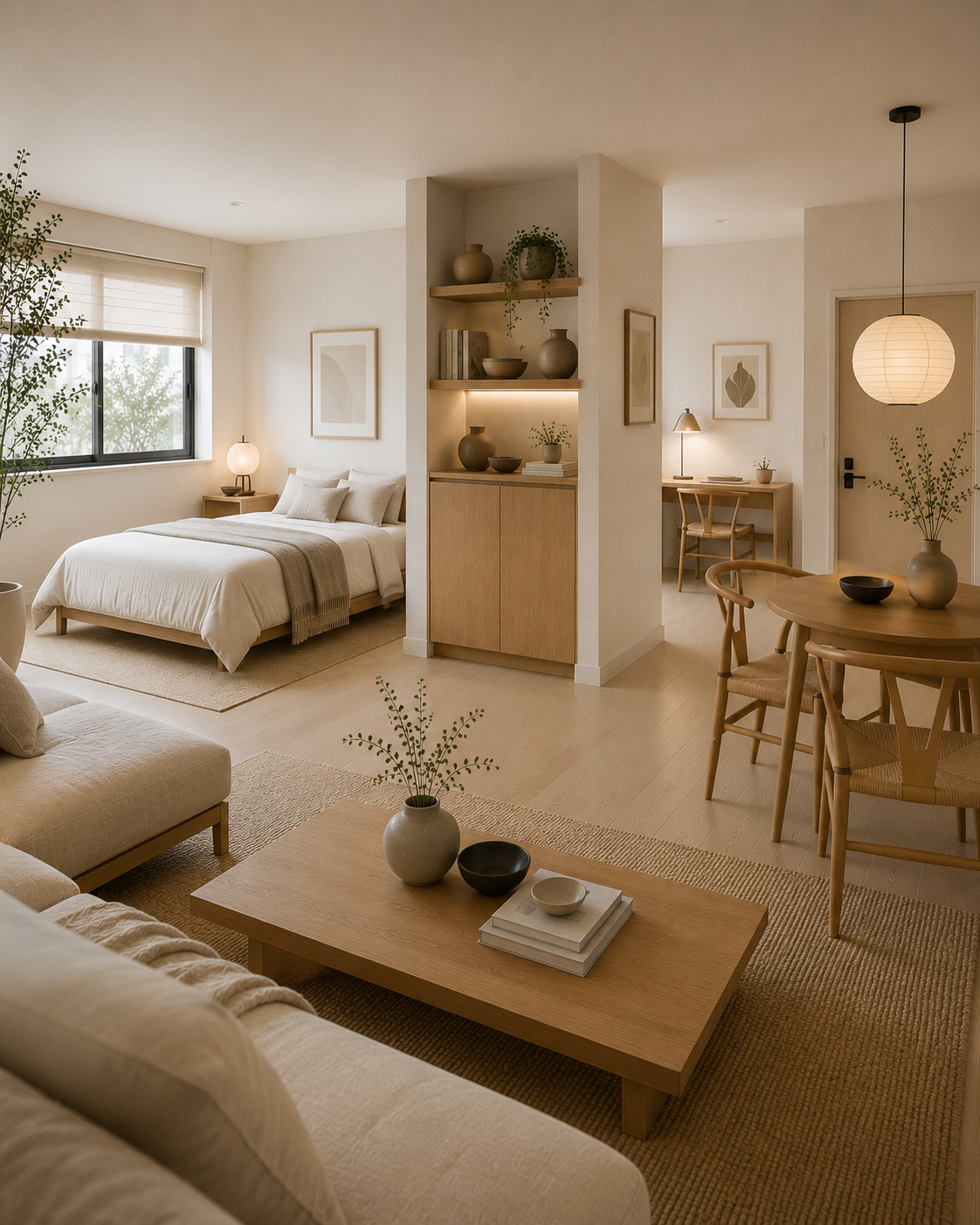
9. Keep the Layout Open and Calm
The strongest Japandi studio layouts protect clear pathways. Avoid placing furniture where it blocks windows, doors, closets, or the natural walking route through the room.
Give each zone one job when possible: sleep, sit, eat, work, store. A calm layout is not only visual. It makes daily routines easier because the apartment is not asking every corner to do everything at once.
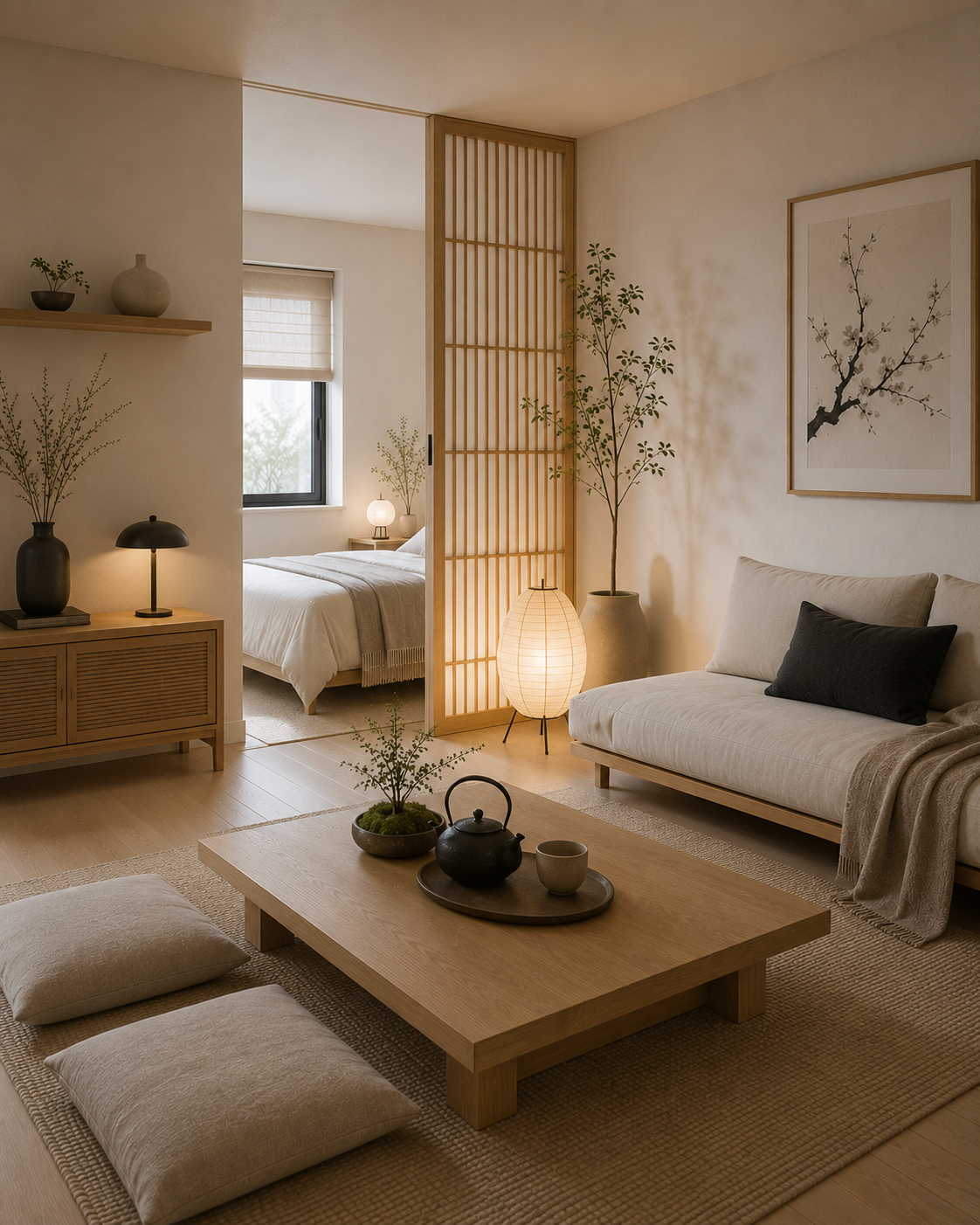
10. Mix Modern and Japanese-Inspired Details
Japandi style works best when the Japanese-inspired details are subtle: a paper lamp, low furniture, simple ceramics, natural wood, quiet bedding, or a balanced asymmetrical shelf. Pair those details with modern lines so the room feels current rather than themed.
In a small studio, edit before adding more. A few intentional details will usually feel more refined than a room full of decorative objects.
Final Thoughts
A Japandi studio apartment should feel calm, practical, and easy to live in. Start with a neutral base, add warmth through lighting and texture, use storage that reduces visual clutter, and let black accents give the room quiet structure.
The best small-space version of Japandi is not severe or empty. It is edited, useful, warm, and restful.